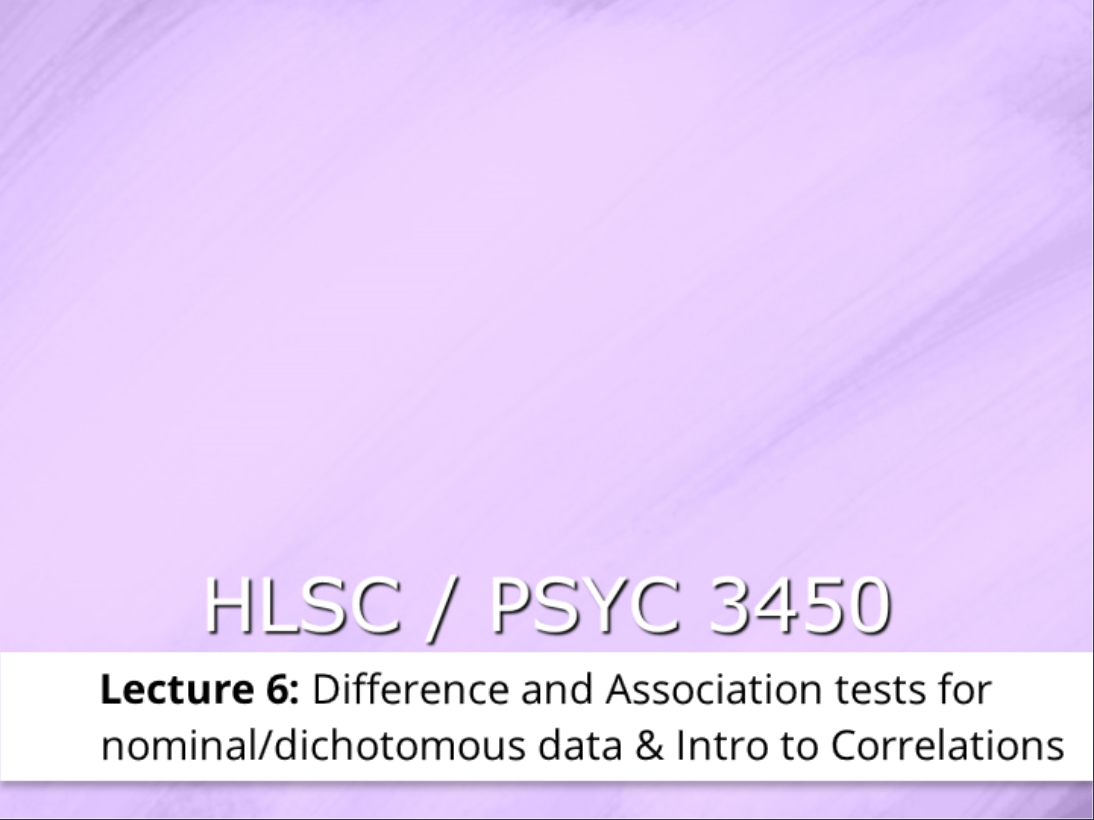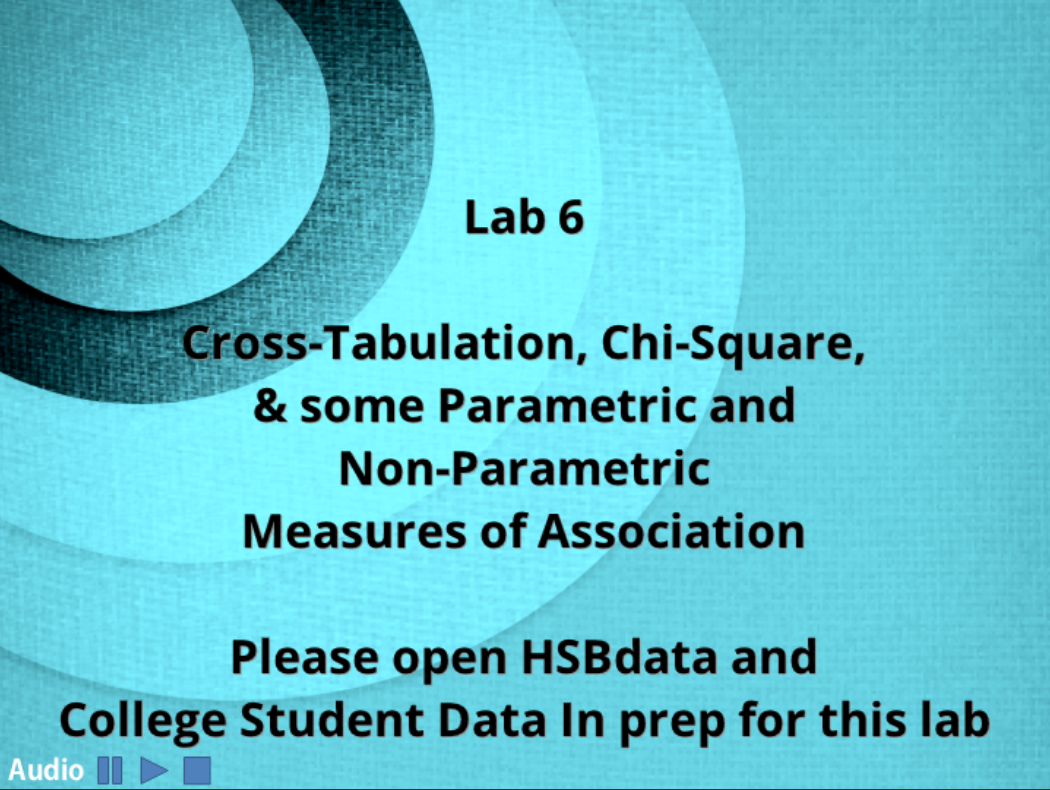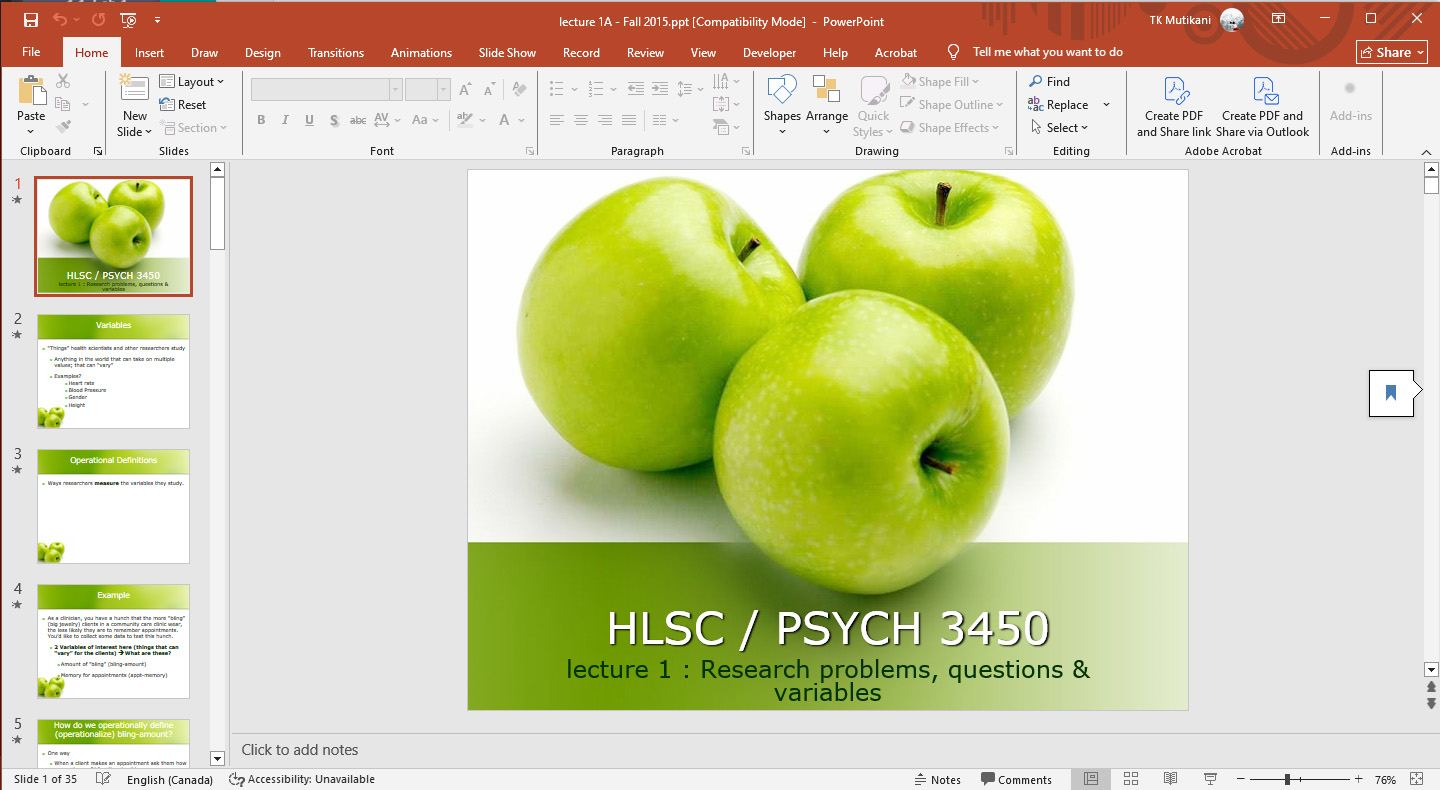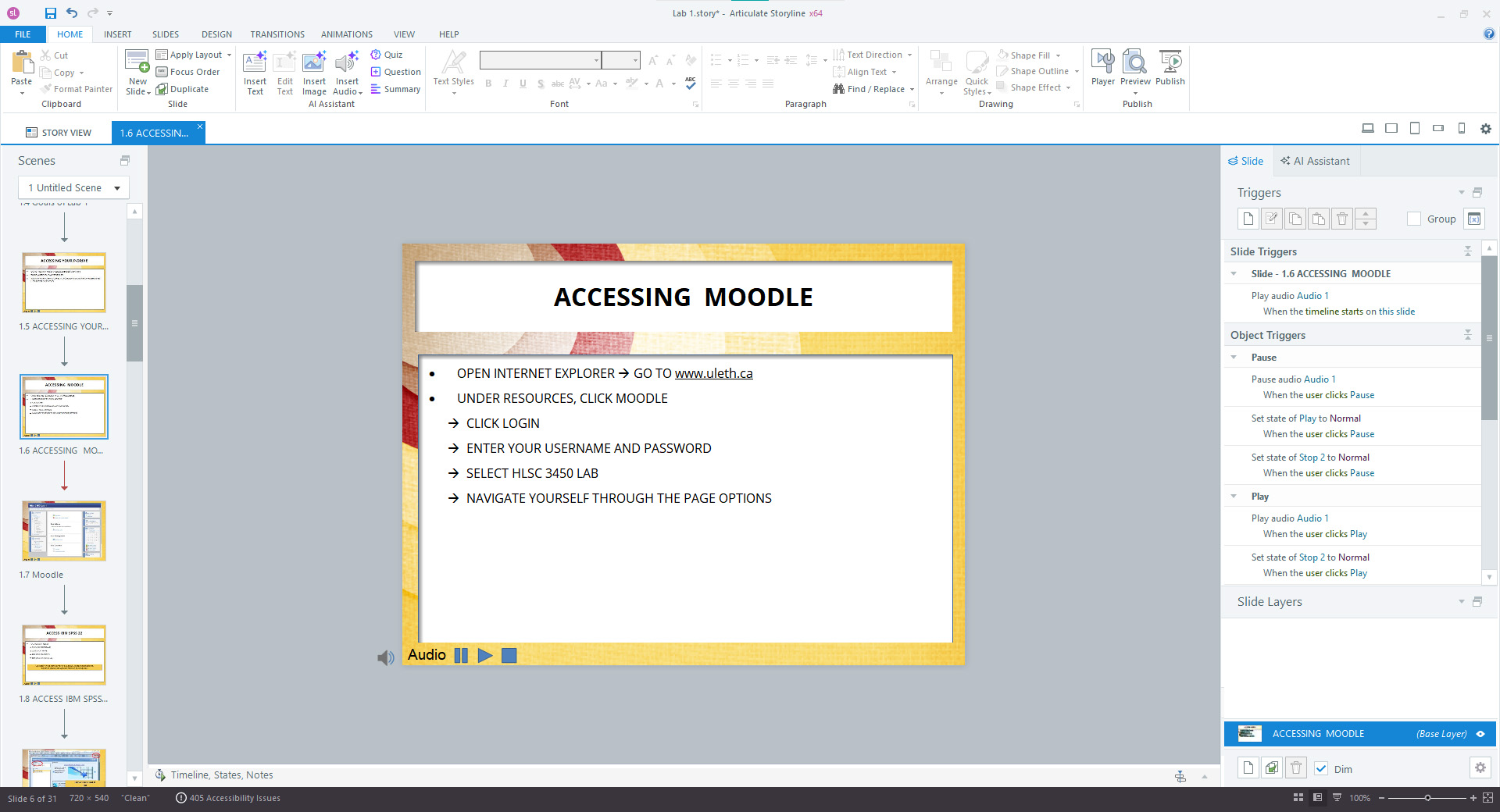
HLSC/PSYCH 3450 – APPLIED STATISTICS FOR CLINICAL PRACTICE. A University of Lethbridge course designed to teach health sciences students the fundamentals of statistics and data analysis in clinical settings. The course covers topics such as descriptive statistics, inferential statistics, hypothesis testing, and data interpretation, with a focus on practical applications in healthcare research and practice.
As an instructional designer on this project, I was responsible for converting well-researched in-classroom materials into comprehensive online learning experiences for the course's first Moodle deployment. I developed interactive slide presentations with synchronized narration, integrated formative quizzes, and designed engaging learning activities to ensure remote learners received equivalent educational outcomes to their in-person peers. Working closely with Professor Olu Awosoga, I carefully translated classroom dynamics into effective asynchronous and synchronous digital interactions, maintaining pedagogical integrity while leveraging Moodle's capabilities to create an accessible and engaging online statistics course.
Apr 2016 - Sept 2016
2 People
Olu is a professor of Health Sciences with a focus on statistics.He was the spearhead behind this project to move this complicated course online.
The University of Lethbridge's Faculty of Health Sciences was a key collaborator on the project. The Nursing Program, led by Professor Kathy Haight, was responsible for starting the program in junction with Alberta Quits, and for distributing it in classrooms as part of its commitment to evidence-informed community health education.
Graphic / Visual Designer
Learning Experience Design (LXD)
Lesson Coordinator
Gamification Strategy and Development
Instructional Design
Here are selected lessons and learner engagements I designed for The Academy. Classroom-ready e‑learning modules, interactive games, and supporting resources crafted to engage students and reinforce key health concepts.

The online redesign of HLSC/PSYCH 3450 transformed the course delivery, doubling enrollment and providing accessible, trackable learning experiences that accommodated diverse learner needs.
Increase in Enrollment
Doubling the number of students able to take the course through online access
Progress Monitoring
Moodle platform enabled detailed tracking of student engagement and completion
Replays Allowed
Students could revisit lessons, quizzes, and activities as needed
Learning Options
Accommodated auditory and visual learners with flexible multimedia
The online course offering resulted in a 200% increase in enrollment, allowing twice as many students to access the statistics curriculum. The Moodle platform provided trackable progress for each learner, enabling instructors to monitor engagement and identify areas needing support.
Students benefited from multiple replays of lessons, activities, and self-testing quizzes, reinforcing learning through repetition. Auditory learners could replay narrated content at various speeds, while visual learners followed along with images and diagrams, creating an inclusive environment that supported diverse learning styles.
A concise account of the work to convert HLSC/PSYCH 3450 into a Moodle-based online course, focused on accessibility, learner engagement, and measurable outcomes.
Modernizing a required statistics course
HLSC/PSYCH 3450 was delivered primarily in person and needed to be adapted for remote and asynchronous learners while preserving academic rigor. The program required a scalable online option that would maintain learning outcomes, support diverse learners, and allow instructors to monitor student progress.
Design an accessible, trackable online offering
The objective was to convert existing course materials into a Moodle course that delivered the same learning outcomes. Key tasks included structuring lessons for online consumption, adding narrated slide content, embedding formative quizzes, and ensuring accessibility and ease of use for both students and instructors.
Build, test, and refine the online course
I reviewed course materials, designed concise narrated lessons, and implemented interactive elements and quizzes in Moodle. Accessibility considerations (captioning, clear visuals, and flexible playback) were applied. I worked iteratively with the instructor to test content, adjust pacing, and ensure assessments aligned with course objectives.
Expanded access and improved learning flexibility
The Moodle deployment was offered as an additional course option the following semester. Enrollment capacity effectively doubled by providing remote access, while the platform's tracking tools allowed instructors to monitor engagement and completion. Students benefited from replayable lessons, self-testing quizzes, and multimedia supports: auditory learners could replay and adjust narration speed, and visual learners could follow diagrams and embedded visuals.